



























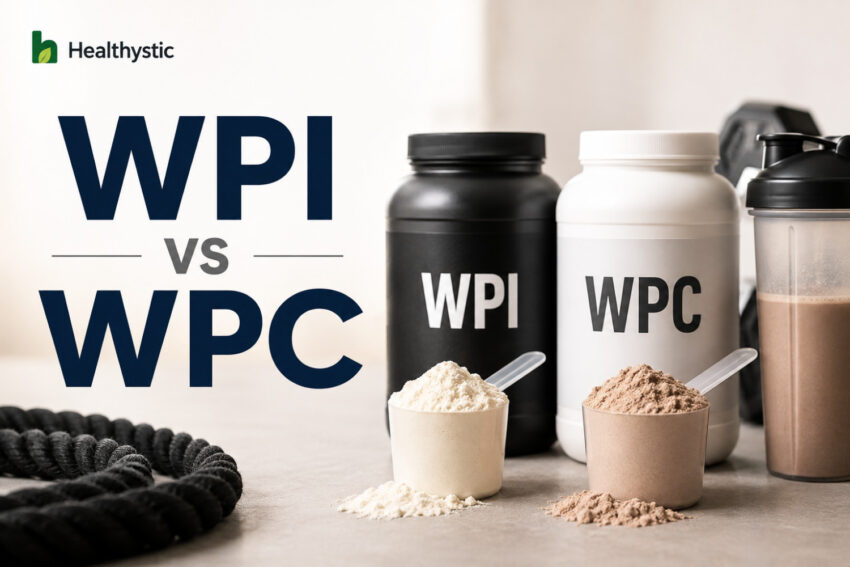

Whey protein isolate and whey protein concentrate are the two most common forms of whey protein on the market. They come from the same starting material — liquid whey — but the processing each undergoes produces meaningfully different products with different nutritional profiles and use cases.
Understanding the WPI vs WPC distinction makes it easier to choose the right product for your goals rather than defaulting to whichever has the better packaging or lower price tag.
Whey protein isolate is the more refined of the two and suits specific situations particularly well. Whether it’s the right choice over WPC depends on what you’re trying to achieve and how your body responds to dairy.
Where Whey Protein Comes From
Both WPI and WPC start as liquid whey, a byproduct of cheese manufacturing. When milk is processed to make cheese, it separates into casein solids and liquid whey. That liquid is then filtered, concentrated, and dried into powder.
The difference between WPI and WPC is how much processing happens after that initial separation. More processing produces a higher protein concentration with less fat and lactose remaining. Less processing retains more of the naturally occurring compounds in whey alongside a lower protein percentage.
Neither approach is inherently superior. Each produces a product suited to different situations.
What WPC Is and When It Suits You
Whey protein concentrate undergoes less processing than WPI, which means it retains more of the fat, carbohydrates, and bioactive compounds naturally present in whey. These include immunoglobulins and lactoferrin, which have their own nutritional properties and are partially lost during the additional filtration WPI requires.
WPC typically delivers 70 to 80% protein by weight per serve. The remaining content is a small amount of fat and carbohydrate, which contributes to a richer flavour and creamier texture than more refined forms. Many people find WPC more palatable for this reason.
The slightly higher fat content means WPC digests a little more slowly than WPI. For post-workout use where fast absorption is the priority, this is a mild disadvantage. For use at other times of day — between meals, before bed, or as a general dietary protein source — the difference is negligible.
WPC suits people who digest dairy well, aren’t tracking macros to the gram, and want a cost-effective high-quality protein for everyday use. It’s particularly well-suited to muscle-building phases where the small additional carbohydrate and fat content is not a concern.
What WPI Is and When It Suits You
Whey protein isolate undergoes additional filtration — typically cross-flow microfiltration or ion exchange — after the initial whey separation. This removes most of the remaining fat and lactose, producing a powder that typically sits at 90% or above protein by weight.
The result is a leaner product with a cleaner nutritional profile. Lower fat and carbohydrate content means fewer total calories per gram of protein, faster digestion, and better tolerance for people with lactose sensitivity.
The additional processing does remove some of the bioactive compounds retained in WPC, but the practical significance of this for most people is modest compared to the advantages WPI offers in specific situations.
WPI suits people in calorie-controlled or cutting phases where every gram of fat and carbohydrate counts. It suits anyone with lactose sensitivity or intolerance, since the filtration process removes most of the lactose that causes digestive issues. It also suits post-workout use specifically, where the faster absorption rate means amino acids reach muscle tissue sooner after training.
The Practical Differences Side by Side
The nutritional gap between WPI and WPC is real but not dramatic for most people. Here’s where it actually matters.
Calorie deficit phases: WPI delivers more protein per calorie. Over weeks of controlled eating, this efficiency compounds. If you’re managing intake carefully, WPI is the cleaner option.
Lactose sensitivity: WPC retains lactose. WPI removes most of it. If dairy causes digestive discomfort, WPI is the reliably safer choice.
Post-workout timing: WPI absorbs faster due to lower fat and carbohydrate content. For people who prioritise the post-workout window, this gives WPI a modest edge.
Everyday use and cost: WPC is typically more affordable and performs equally well as a general dietary protein source outside of the specific situations above. The retained fat contributes to better flavour and texture that many people prefer over the longer term.
Budget: WPC is consistently more cost-effective than WPI. For people whose situation doesn’t specifically call for WPI, the price premium isn’t justified by a meaningful performance difference.
What to Check on Either Product
Whether you buy WPI or WPC, the quality markers are the same. Protein per serve should be stated in actual grams, not just as a percentage. Every ingredient and its dose should be disclosed individually with no proprietary blends. The protein figure should come from the whey source itself, not from cheaper amino acids added to inflate the nitrogen count. Independent batch testing by an accredited third-party laboratory should confirm that what’s on the label matches what’s in the product.
Manufacturing credentials matter too. Facilities certified to ISO and HACCP standards operate under strict production controls that are a meaningful indicator of consistency and quality across batches.
Also Read: Three Key Benefits of Protein for Your Body
FAQs
Is WPI always better than WPC?
No. WPI is better in specific situations: calorie-controlled phases, lactose sensitivity, and post-workout use where fast absorption matters. Outside of these, WPC performs equally well at a lower price point. Better depends entirely on your situation.
Can I switch between WPI and WPC?
Yes. Some people use WPI post-workout for fast absorption and WPC at other times for cost efficiency and flavour. There’s no issue alternating between the two based on timing or phase of training.
Does WPC cause bloating?
It can, particularly in people with lactose sensitivity. The lactose retained in WPC is the most common cause of digestive discomfort. Switching to WPI removes most of the lactose and typically resolves the issue.
How much protein do I need per day?
Most research supports 1.6 to 2.2g of protein per kilogram of bodyweight daily for people training to build muscle. Both WPI and WPC contribute toward this total. The source matters less than consistently hitting the daily target.
Is the taste difference between WPI and WPC significant?
Yes, noticeably for many people. The fat retained in WPC contributes to a creamier texture and richer flavour. WPI tends to be thinner and slightly less palatable as a result of the additional filtration. This is a practical consideration for people who use protein powder daily over the long term.

This article is published by our independent team of health and wellness pundits that publish original and informative content to empower readers to take charge of their health and embark on a physically, mentally, and emotionally balanced lifestyle.
Disclaimer: This article is for general informational and educational purposes only and is not a substitute for professional medical advice, diagnosis, or treatment. Always consult a qualified healthcare professional before making decisions about your health, including changes to your diet, exercise, supplements, or medications.