




























Not all DMSO is created equal. The grade on the label tells you how it was purified, tested, and packaged, and that matters more than most people realize.
DMSO (dimethyl sulfoxide) shows up in a lot of places, from industrial degreasers and paint thinners to wellness cabinets and veterinary shelves. It’s the same core molecule, but the version sold for wellness use and the version sold in a hardware aisle are not interchangeable. The dividing line comes down to one word on the label: grade.
If you’ve ever compared two bottles of DMSO and wondered why one costs more, or why some people are adamant about buying “pharmaceutical grade,” this is the piece that clears it up.
What “grade” really refers to
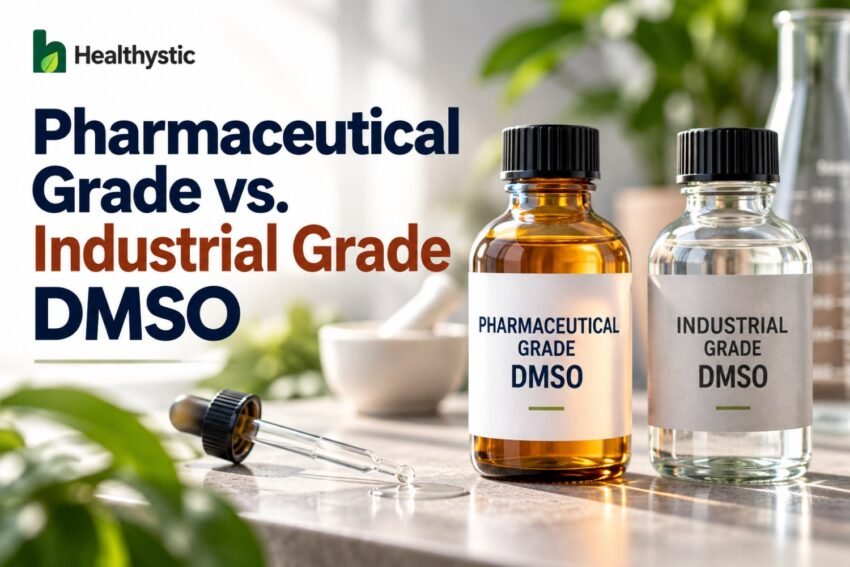
Grade isn’t a marketing flourish. It describes the purity level and the testing standard a batch was held to. The three you’ll typically encounter:
- Industrial grade: The lowest purity tier. Manufactured as a solvent for manufacturing, cleaning, and chemical processing. May contain residual impurities and contaminants that are irrelevant for degreasing an engine but very relevant for anything touching skin.
- Pharmaceutical (USP) grade: Purified to meet United States Pharmacopeia standards, typically 99.9%+ purity, with tight limits on water content and trace contaminants. Tested, documented, and consistent batch to batch.
- Analytical / reagent grade: Ultra-high purity for laboratory work; usually overkill (and overpriced) for personal use.
Why the difference matters
DMSO is famous for one property above all: it penetrates skin rapidly and carries dissolved substances along with it. That’s the whole appeal, and also exactly why purity is non-negotiable. Whatever is in the bottle can be carried through the skin barrier.
With industrial-grade product, “whatever is in the bottle” may include solvents and byproducts you’d never want absorbed. With pharmaceutical/USP grade, the kind of pharmaceutical-grade DMSO sold by quality-focused suppliers, you’re getting a purified, tested product where you actually know what you’re applying.
Put simply, the carrier property that makes DMSO useful is the same reason cutting corners on grade is a bad idea.
How to actually verify what you’re buying
Labels can be optimistic. A few things that separate a serious supplier from a repackager:
- Stated purity + USP language: Look for “99.9%” and explicit USP / pharmaceutical grade wording, not vague “high quality.”
- Certificate of Analysis (COA): Reputable sellers can show batch testing. If nobody can produce one, that’s your answer.
- Appropriate packaging: DMSO reacts with certain plastics. Quality product ships in compatible bottles (amber glass or DMSO-safe HDPE), not whatever was on hand.
- Clear sourcing: A supplier that’s transparent about grade and testing is telling you something; one that’s cagey is telling you something too.
The bottom line
Industrial-grade DMSO exists to clean and dissolve things in manufacturing settings. Pharmaceutical/USP grade exists to be a purified, tested, consistent product.
If you’re using DMSO for any personal wellness purpose, grade is the single most important spec on the label, more than price and more than bottle size. Buy the tested one, and buy from someone who can prove what’s inside.

This article is published by our independent team of health and wellness pundits that publish original and informative content to empower readers to take charge of their health and embark on a physically, mentally, and emotionally balanced lifestyle.
Disclaimer: This article is for general informational and educational purposes only and is not a substitute for professional medical advice, diagnosis, or treatment. Always consult a qualified healthcare professional before making decisions about your health, including changes to your diet, exercise, supplements, or medications.